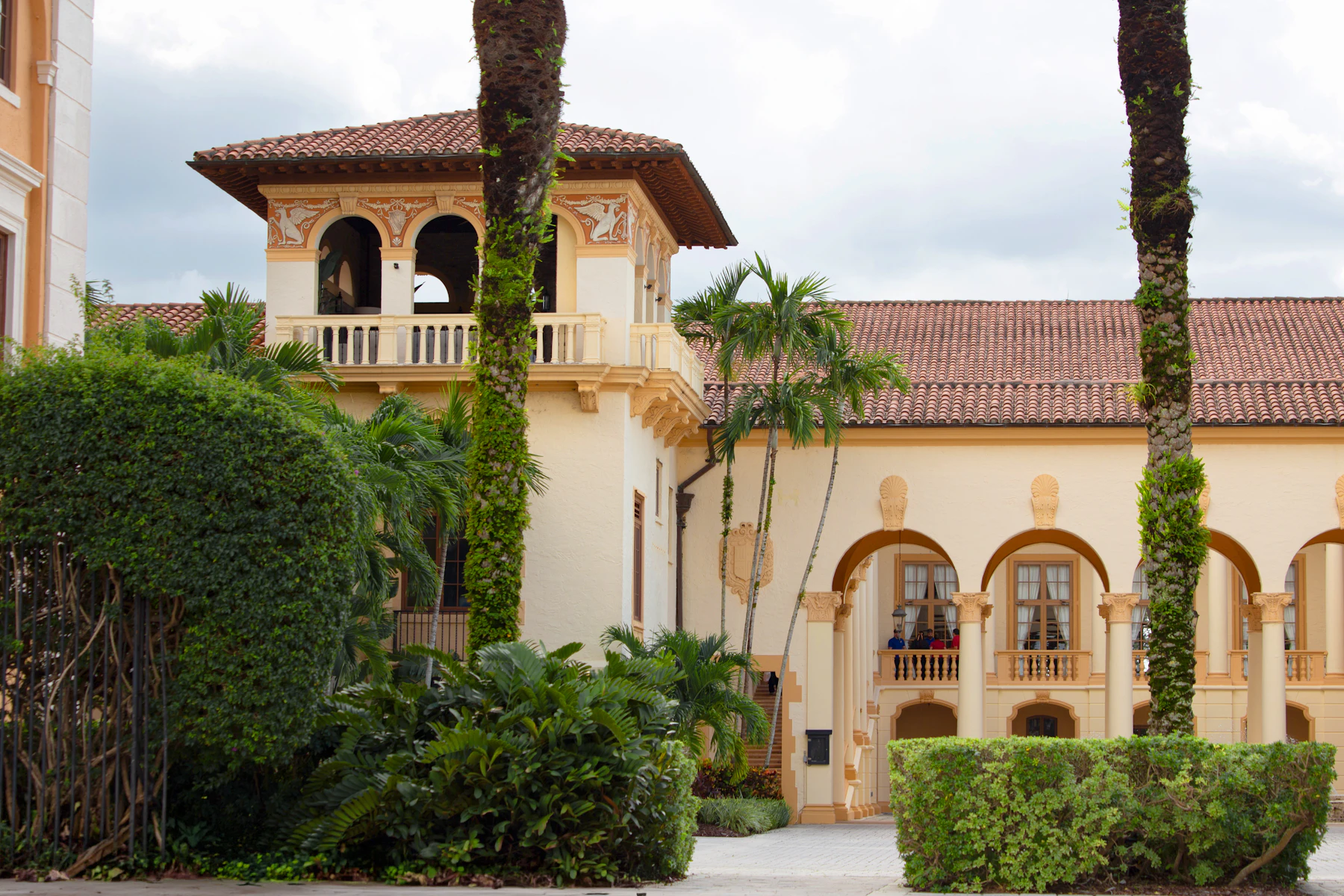
A few minutes from downtown Miami, Coral Gables looks like no other city in Florida. Here, almost everything was designed in advance: the streets, the squares, the fountains and even the style of the houses. It is the work of one man and a wild era, that of the 1920s real estate boom.
George Merrick's dream
George Merrick is a developer from Pennsylvania. During Florida's great real estate boom, he imagines a complete city on his family's land. He gives it the name of the family home. The city is officially created on 29 April 1925.
An imposed style: Mediterranean
The original plan imposes a single style: “Mediterranean Revival”. Red tiles, light walls, arches and patios recall Spain and Italy. Even today, the city's architecture remains almost entirely faithful to this choice. The main artery, Miracle Mile, runs through the shopping district.
The two landmarks to know
- The Biltmore: this grand hotel opens in 1926, with its golf course.
- The Venetian Pool: a public pool built in a former coral rock quarry, abandoned in 1921. It opens in 1924, with bridges, towers and waterfalls. It is fed by water from an underground aquifer and holds more than 3 million liters.
The Venetian Pool is often cited as the only pool listed on the US National Register of Historic Places. The stone extracted from the quarry was used to build part of the city.
A university town
The University of Miami also settles in Coral Gables. Construction begins in 1925, and the first class of 372 students arrives in the fall of 1926. The university is still part of the city's identity.
Coral Gables today
The city had 49,248 residents at the 2020 census. It is known for its shaded streets, its strict planning rules and its restaurants. It is a good example of the Florida that dreamed of being a European Riviera.
In short, Coral Gables was born from a single plan, wanted by a single developer in the middle of a real estate fever. A century later, its planning rules still protect this Mediterranean style. It is a rarity in Florida, where many old neighborhoods have been razed to build taller.
Did this guide help you?
Read next
Key Biscayne, the Garden Island Facing Miami
An old lighthouse, big beaches and a park given to the public: Key Biscayne is the nature getaway closest to downtown Miami.
Little Haiti, Haitian Culture in the Heart of Miami
A colorful market, a Creole bookstore and a cultural center: Little Haiti has been the home of Miami's Haitian community since the 1980s.
Hialeah, the Most Cuban City in the United States
A racetrack with pink flamingos and a population more than 80% of Cuban origin: Hialeah is a city apart in Greater Miami.
Calle Ocho: Miami's Biggest Latino Carnival
Every March, Little Havana closes its streets for a giant party of Latino music and food. History and landmarks of a record-setting event.